This past summer, long-time friend and colleague in land protection, Jack Smiley, informed the TLC that 440 acres of the well known Sibley Prairie south of Detroit was soon to be auctioned. The TLC joined the Save Sibley Prairie Coalition, a group of several environmental organizations, in an effort to protect this imperiled natural area. The coalition includes The Michigan Botanical Society, Ducks Unlimited, Friends of the Rouge, Legacy Land Conservancy, Detroit Bird Alliance, Michigan Land Conservancy, Sierra Club Southeast Michigan Group, Southeast Michigan Land Conservancy, The Nature Conservancy, Wayne County Conservation District, and the Thumb Land Conservancy, among other groups and individuals.
Back in the late 1980s, at the suggestion of Michigan Nature Association founder Bertha Daubendiek, TLC Executive Director Bill Collins, first got acquainted with Jack Smiley, who was then President of the Detroit Audubon Society. Jack later went on to found the Southeast Michigan Land Conservancy, and most recently, the Michigan Land Conservancy. First as private ecological consultants, and later as members of the Michigan Nature Association, Bill and TLC President Cheryl Collins, briefly assisted Jack on a few protection projects in the 1990s and early 2000s, including an effort to oppose a large residential development on Sibley Prairie.
The 440 acres of Sibley Prairie we are now trying to protect are located along the south side of Sibley Road in Brownstown Township, Wayne County, Michigan. The prairie is historically part of a much larger lakeplain complex that covered much of the lakeplain south of Detroit and Downriver through northern Ohio. The remaining Sibley Prairie complex is located largely between Sibley, Telegraph, King, and Inkster roads, just 4 miles outheast of Detroit Metropolitan Airport. It is Michigan’s largest and highest quality lakeplain prairie remnant; a rich mosaic of forest, wetland, and prairie. Less than 1% of the original extent of Michigan’s lakeplain prairie remains today. Here is a map link showing the location of the 440- acre Sibley Prairie property.
The remaining Sibley Prairie complex is located largely between Sibley, Telegraph, King, and Inkster roads, just 4 miles southeast of Detroit Metropolitan Airport. It is Michigan’s largest and highest quality lakeplain prairie remnant; a rich mosaic of forest, wetland, and prairie. Less than 1% of the original extent of Michigan’s lakeplain prairie remains today. Here is a map link showing the location of the 440- acre Sibley Prairie property.
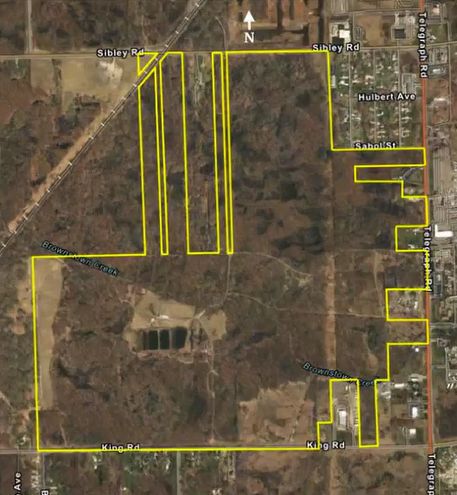
Sibley Prairie parcel map from SaveSibleyPrairie.org.
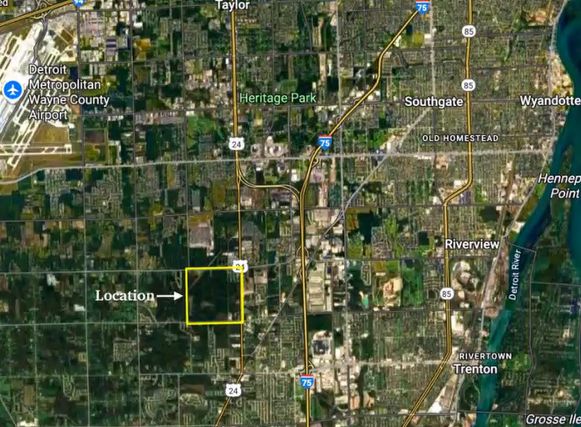
If the public would like to experience what parts of the Detroit area were like before most of it was developed, Sibley Prairie is it; an irreplaceable natural heritage for us, future generations, and the many wonderful and increasingly rare species that occur in few other places of the world. Look at an aerial photograph and you’ll see that Sibley Prairie is located in one of the largest patches of green remaining at the south edge of metro Detroit. At nearly one square mile, Sibley Prairie is part of the biggest lakeplain prairie and savanna complex remaining in Michigan, but only a small piece of its former approximately 25 square-mile area.
If the public would like to experience what parts of the Detroit area were like before most of it was developed, Sibley Prairie is it; an irreplaceable natural heritage for us, future generations, and the many wonderful and increasingly rare species that occur in few other places of the world. Look at an aerial photograph and you’ll see that Sibley Prairie is located in one of the largest patches of green remaining at the south edge of metro etroit. At nearly one square mile, Sibley Prairie is part of the biggest lakeplain prairie and savanna complex remaining in Michigan, but only a small piece of its former approximately 25 square-mile area.
As the last glacier receded, meltwaters deposited vast flat expanses of deep clay around the margins of the early Great Lakes. As water levels dropped, large parts of the lakeplain clay were left covered by sandy soils; a mix of ancient beaches, dunes, and meltwater flow deposits in broad channels. This varied landscape of shallow sands over thick clay is where lakeplain prairie and lakeplain oak openings, or savannas, developed and thrived for millennia.
A shallow water table perched on the underlying lakeplain clay fluctuates seasonally and often in sync with the cyclic high and low water levels of the nearby Great Lakes. In dry low-water years, some plant species shift to lower, wetter ground. Prior to Euro-American settlement, the vegetation often burned during these drier times due to fires set by indigenous people by of the local Wyandotte and possibly Pottawatomi tribes in their effort to improve hunting conditions by favoring grasses and also culturally important food and fiber plants. In wetter high-water years, plant species sensitive to flooding shifted to higher ground while marsh and swamp expanded in the lower portions of the landscape.
Before they were largely eliminated by trapping, beaver were responsible for flooding large portions of the relatively flat landscape. The varied landscape of flats, depressions, sand ridges, along with the wet and dry cycles of saturation and inundation followed by burning, resulted in a nique and dynamic complex of wet lakeplain prairie, shrub swamp, marsh, and open flatwoods, with oak openings or savanna on adjacent low ridges; together, a rich and diverse collection of plant and animal species adapted to this habitat mosaic, many now quite rare.
So, what’s in this lakeplain prairie complex? At first glance in the spring and early summer, you might see just a wet meadow of prairie grasses, sedges, and rushes. But in the late summer and early fall, the prairie turns into a diverse and colorful array of flowering forbs like blazingstar, gentians, mountain-mint, shrubby cinquefoil, goldenrods, milkweeds, coneflowers, lupine, lobelia, prairie dock, betony, colic root, coreopsis, ronweed, asters, and more.
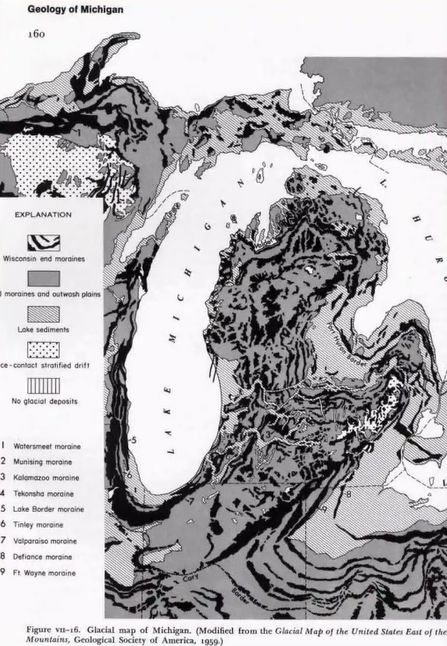
Lakeplains of Michigan, southwest Ontario, northwest Ohio,
northwest Indiana, and Chicago, Illinois region shown as
hatched “lake sediments” areas. From Geology of Michigan,
Dorr, John A. and Eschman, Donald F., University of Michigan
Press, 1970.
Attracted to all of these flowers, a plethora of butterflies, moths, bees, beetles, and other pollinating insects are busy at work across the prairie. Within the prairie are patches of shrub swamp full of Buttonbush (a pollinator magnet), dogwood, willow, elderberry, Swamp Rose, hazelnut, and annyberry among many other shrubs and a great variety of flowering herbs. Wet prairie and marsh occupy the lowest and wettest areas, full of bulrush, spike-rushes, rushes, sedges, cat-tail, bluejoint grass, and various forbs, with arrowhead, pondweed, water-celery, bladderwort, coontail, and water-lily in and around open water.
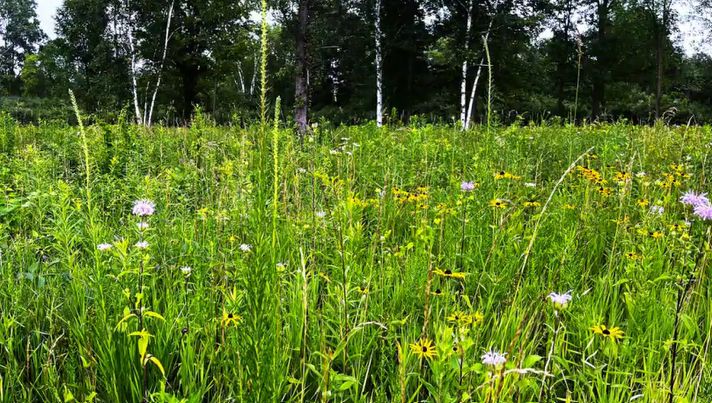
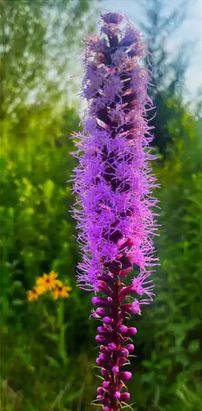
Left: Remnant lakeplain prairie in western Marysville, Michigan showing Marsh Blazing-star (tall spikes prior to
flowering), Wild-bergamot, and Black-eyed Susan. The landowner cut the entire area one day after this photo
was taken. Right: Marsh Blazing-star in remnant lakeplain prairie in western Marysville, Michigan. Photographs
by Teddy Wiley
Sand ridges or knolls support oak-dominated savanna, known as oak openings, also covered by hickory, ash, sassafras, maple, cherry, serviceberry, hawthorn, dogwood, hazelnut, sumac, huckleberry, blueberry, Sweetfern, Bearberry, as well as forbs and grasses from the adjoining prairie. This prairie and savanna landscape was used by indigenous people for trails, settlements, and as a source of nuts, berries, and other food and fiber plants.
Included in the complex are the unique wetmesic flatwoods of southeast Michigan, dominated by several species of oak, including Michigan Special Concern Shumard’s Oak, the uncommon Shellbark Hickory, Michigan Threatened Pumpkin Ash, and Michigan Endangered Black cottonwood, with an understory of Hornbeam, Hop-hornbeam, Prickly-ash, arrow-wood, Spicebush, Riverbank Grape, Poison Ivy, and typically a sparse ground layer of woodland forbs and sedges.
Originally, lakeplain prairie covered very little of Michigan, totaling not quite 158,000 acres, or about 245 square miles; only about 0.4% of the land area of the entire state as estimated by the Michigan Natural Features Inventory using General Land Office notes from the first Michigan surveys in the 1800s. Unfortunately, most prairies in Michigan were first to be drained and cropped because the need for tree clearing was minimal and the ground was rich. Today, only about 1,250 acres of lakeplain prairie remains, or just 0.8% of the original acreage. In other words, 99.2% of the lakeplain prairie in Michigan has been destroyed in roughly the past 200 years. As such, lakeplain prairie is considered critically imperiled in Michigan and essentially on a global basis. Is it not high time to protect every piece that remains?
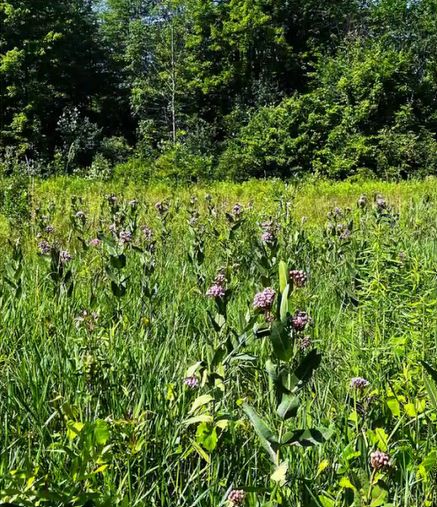
Sullivant’s Milkweed in remnant lakeplain prairie in western
Marysville, Michigan. Photograph by Teddy Wiley
Sibley Prairie has been well-known to the US Fish and Wildlife Service, Michigan Department of Natural Resources, Michigan Natural Features Inventory, conservation groups, and ecologists for many years. Based on recorded occurrences maintained by the Michigan Natural Features Inventory, the Sibley Prairie complex and vicinity supports at least one Michigan Endangered, six Michigan Threatened, and 16 Michigan Special Concern plant and animal species.
In addition, based on the plant community complex in general, many more rare species are possible. In just the past 25 years, at least 18 rare species that could occur on or near Sibley Prairie have increased in priority from Special Concern to Threatened, or Threatened to Endangered, indicating the increasingly imperiled status of these species and the natural communities that provide habitat.
Over 200 native plant species are recorded from the Sibley Prairie complex, most depending on lakeplain prairie habitat and occurring in few other locations in Michigan. The Michigan Natural Features Inventory identified Sibley Prairie as the highest quality lakeplain prairie remnant of 53 surveyed in Michigan. The Floristic Quality Index of Sibley Prairie is nearly 70 on a scale of 0 to 100, almost unheard of in southeast Michigan. Most natural areas in Michigan score between 20 and 40. Likewise, several uncommon and rare animal species are known from Sibley Prairie and the vicinity. Some are found only in a few locations in the southeast corner of the State, such as Michigan Threatened Duke’s Skipper butterfly.
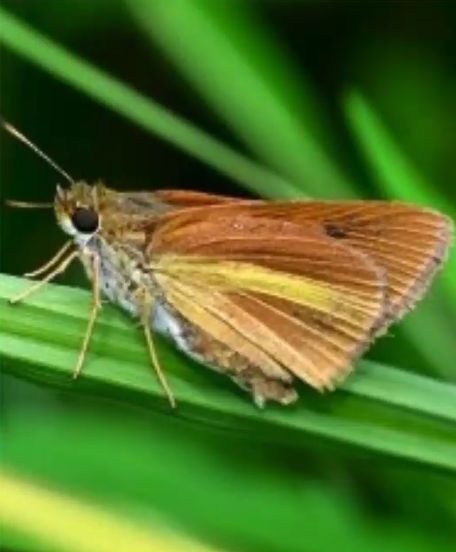
Duke’s Skipper butterfly. Photograph by Ashley ColeWick.
Rare and imperiled species that have either been observed and documented from Sibley Prairie or could occur there based on the plant iommunities, include the following:
US Endangered: Karner Blue butterfly, Northern Long-eared Bat, and Indiana Bat.
US Threatened: Monarch butterfly (proposed US Threatened), Prairie White-fringed Orchid, and Eastern Massasauga rattlesnake. Michigan Endangered: Gattinger’s Gerardia, Skinner’s Gerardia, Shorteared Owl, Henslow’s Sparrow, Roundseed Panic Grass, Lambda Snaggletooth snail, Downy Gentian, Prairie Vole, Indiana Bat, Prairie White-fringed Orchid, Black Cottonwood, King Rail, Few-flowered Nut-rush, and Barn Owl.
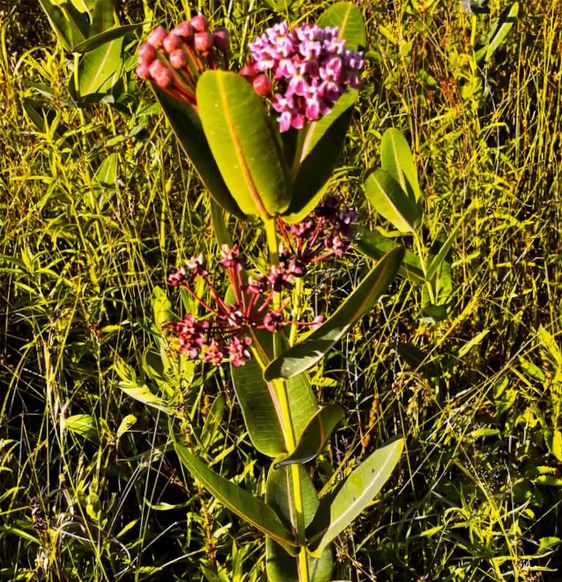
Sullivant’s Milkweed in remnant lakeplain prairie in western Marysville,
Michigan. Photograph by Teddy Wiley.
Michigan Threatened: Tall Green Milkweed, Purple Milkweed, Sullivant’s Milkweed, Panicled Screwstem, Missouri Rock-cress, Fescue Sedge, Spotted Turtle, Least Shrew, White Lady-slipper orchid, Persius Duskywing butterfly, Upland Boneset, Tinted Spurge, Dukes’ Skipper butterfly, Leafhopper, Pumpkin Ash, Downy Sunflower, Panicled Hawkweed, Short-fruited Rush, Vasey’s Rush, Woodland Lettuce, Least Pinweed, Leggett’s Pinweed, Virginia Flax, Northern Prostrate Clubmoss, Wing-stemmed Monkeyflower, Eastern Fox Snake, Culver’s Root Borer, Silphium Borer moth, Karner Blue butterfly, Sand Cinquefoil, Maryland Meadow-beauty, Netted Nut-rush, Eastern Massasauga rattlesnake, Atlantic Blue-eyed-grass, Eastern Box Turtle, and Virginia Spiderwort.
Michigan Special Concern: Grasshopper Sparrow, Hairy Angelica, Three-awned Grass, Cooper’s Milk Vetch, Dusted Skipper butterfly, American Bittern, Richardson’s Sedge, Northern Harrier, Leafhopper, Engelmann’s Spike-rush, Blanding’s Turtle, Whiskered Sunflower, Gentian-leaved St. John’s-wort, Conobea, Furrowed Flax, Northern Appressed Bog Clubmoss, Bog Conehead Katydid, Red-faced Meadow Katydid, Delicate Meadow Catydid, Green Desert Grasshopper, Blazing-star Borer, Maritime Sunflower Borer, Wilson’s Phalarope, Cross-leaved Milkwort, Shumard’s Oak, Meadow-beauty, Tall Beak-rush, Tall Nut-rush, Prairie Warbler, Dickcissel, Prairie Dropseed, and Willow Aster. Presumed Extirpated from Michigan: Chestnut Sedge, Violet Wood-sorrel, Sand Milkwort, Honeyflowered Solomon-seal, and Farwell’s Blue-eyedGrass.
Sibley Prairie was even possibly the location of the last endemic bison in Michigan. The bison was shot at the corner of Sibley and Allen roads in Brownstown Township in 1882 by landowner J.G. Carson and the hide still hangs at the Flatrock Historical Museum.
The 440-acre Sibley Prairie property is located within the MDNR acquisition boundaries of the Brownstown Prairie State Wildlife Area – the only State Wildlife Area in Wayne County. Protection of this property had long been a goal of the MDNR. Its addition would increase the Wildlife Area to nearly 500 acres, expanding much needed opportunities for public hunting, birdwatching, nature study, and outdoor recreation for metro Detroit residents. Protecting Sibley Prairie would also advance the MDNR’s Public Land Strategy goals of acquiring land near population centers and expanding outdoor recreation where people live and work. Nowhere is that need greater than in Wayne extensive history of early Euro-American settlement; an abundance of vital ecosystem services provided; and opportunity for muchneeded outdoor recreation land in the Detroit and downriver area. If Sibley Prairie is not worth protecting, then we don’t know what is. As part of our contribution to the efforts of the Save Sibley Prairie Coalition, the TLC donated $5,000 toward the land purchase and paid for broadcast of a fundraising sponsorship on radio station WRCJ 90.9 FM in Detroit, which plays classical and jazz music. The sponsorship consisted of 65 30-second radio spots from November 24 through January 3. The recording can be heard here.
For more information about the Sibley Prairie and to make a donation to the Save Sibley Prairie Coalition, see the web site at: SaveSibleyPrairie.org or scan below.